Are Companies Ready for the New Evolution of Healthcare Tech?
One theme coming out of 2026 HIMSS conference was clear: autonomous, action-oriented AI technologies are now present across healthcare, and their capabilities have matured considerably over the past year.
Agentic AI, for example, was featured prominently in many discussions. These systems monitor conditions, evaluate constraints, and take action within defined parameters. Their promise lies in helping coordinate complex workflows, reduce administrative burden, and improve how fragmented healthcare systems operate.
Alongside the excitement, though, were thoughtful discussions about the gap between technological capability and real-world implementation:
Beyond AI Capabilities
Several themes emerged from HIMSS regarding the real-world implementation of technologies like Agentic AI. Companies must look beyond what AI can do and focus on what it takes to make it successful—like greater collaboration, measurable real-world impact, and operational readiness.
Ecosystem Collaboration
Advancing technology at scale will require coordination between public and private stakeholders—from providers and tech companies to payers and regulators. Meaningful progress depends on aligning these groups, which often operate under different incentives and priorities.
A Focus on Real-World Impact
As AI innovation accelerates, the conversation will continue to emphasize ROI—not just in operational performance, but in overall patient outcomes. Beyond efficiency gains, the industry is increasingly focused on measurable improvements in clinical outcomes, disease management, patient experience, and overall social determinants of health (SDoH).
Operational Readiness
Introducing autonomous systems into real-world operations will create friction. To minimize this, organizations must work alongside the people who will use the technology, rather than just its vocal advocates. Success depends on transparency—providing visibility into how AI decisions are made—and thoughtful implementation to ensure the technology is used as intended and impact can be seen. Those who prioritize a more human-centric approach are far more likely to build lasting trust and ensure their teams lean into the technology's full potential.
Bottom Line
As AI capabilities continue to evolve, the organizations that succeed will not simply be the ones with the most advanced tools. They will be the ones that align technology, people, and processes effectively.
About Move AI
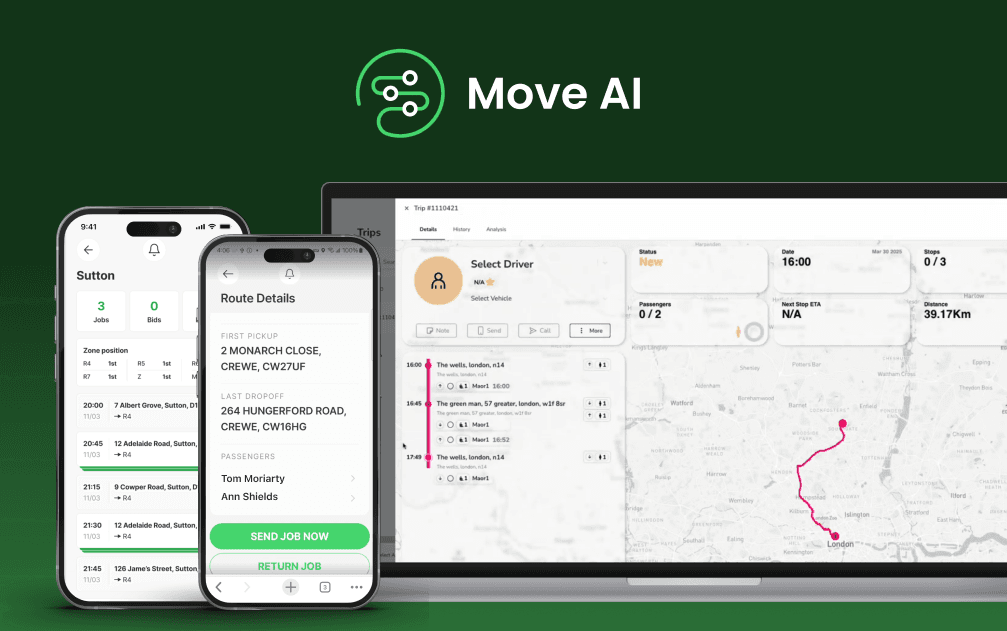
Move AI is rideshare-grade orchestration for NEMT. It gives brokers and transportation providers the freedom to grow by handling the nuances of every trip with built-in speed, precision, automation, and compliance.